Author: MrPaduh

Sustainable Tourism

Policy Plea: Rethinking Sustainable Tourism in Meghalaya

Sustainable tourism cannot and should not be controlled by price. True sustainability rests on carefully regulated numbers, responsible management, and an ethos of mutual respect between hosts and visitors. Meghalaya is celebrating record tourist arrivals while simultaneously promoting sustainable tourism. These two objectives, if not reconciled, risk contradicting one another.

Price as a Poor Regulator

There is a growing belief that raising entry fees or costs will reduce tourist numbers. However, global experience demonstrates otherwise. When a monetary price is imposed, many tourists perceive it as a license — “I have paid, therefore I am entitled to behave as I please.” This approach neither encourages responsible behavior nor preserves the integrity of our natural and cultural assets.

The Recommended Approach

A more effective model is to regulate through clearly defined limits and standards of behavior, with stringent enforcement. This entails:

  • Establishing visitor caps where necessary to prevent overcrowding and ecological damage.
  • Setting out clear rules of conduct for all tourists, communicated transparently at entry points and through official channels.
  • Imposing strict penalties for non-compliance, thereby reinforcing accountability rather than pre-emptive exclusion through pricing.

Such a system does not commodify nature but instead strengthens a culture of responsibility. This framework ensures that visitors who respect the destination are welcomed, while those unwilling to comply are naturally discouraged.

A Practical Analogy

The principle can be illustrated through a simple operational example. In managing a bed and breakfast, guests initially expected breakfast at any time, leaving the hosts unable to function effectively. A clear boundary was established: complimentary breakfast was provided before 8:15 am, with a charge applied thereafter. Significantly, no guest ever chose to pay extra, and behavior naturally aligned with the intended schedule. The objective was not revenue generation, but behavioral alignment.

Policy Implication for Meghalaya

Similarly, in the context of tourism management, the goal is not to raise revenue through entry fees but to guide visitor behavior through regulation and enforcement. Meghalaya should avoid positioning sustainability as a pricing mechanism and instead operationalize it through:

  • Visitor management systems that cap daily or seasonal entry volumes.
  • Codes of conduct outlining permissible and prohibited actions.
  • Hefty fines for violations that threaten ecological or cultural preservation.

Conclusion

Sustainable tourism is not achieved by pricing out certain visitors. It is achieved by fostering respect — respect from the community, respect from the authorities, and respect from the visitors themselves. Meghalaya has the opportunity to lead by example in India by adopting a model that prioritizes regulation, education, and enforcement over revenue-driven deterrence.

{ Add a Comment }

The Miracle We Missed: Wrestling with Faith, Choice, and the Quiet Ways of Love

The Miracle We Missed: Wrestling with Faith, Choice, and the Quiet Ways of Love

My wife passed away one week ago.

She died at home, struggling to breathe, in the same hills where she was born — a place she loved and trusted more than any hospital or doctor’s office.

A year and a half earlier, she had been diagnosed with end-stage chronic kidney disease. It was likely the result of years of untreated hypertension. But when the diagnosis came, she couldn’t accept it. And wouldn’t.

She chose another road. Not one of dialysis or surgery, but one of prayer.

And she wasn’t alone. Many around her — well-meaning people — assured her that faith could heal her. Some laid hands on her, declaring the sickness gone. Others pointed to stories of healing miracles, saying hers was just around the corner. She listened to preachers online who told her to believe and not waver. And she did. She believed with all her heart.

Even as her body told a different story.


When Belief Collides with Reality

As her husband, I was caught between two worlds. I wasn’t from her culture. I’m a foreigner, Caucasian by background, married into a tribal community in Northeast India. But love transcends cultural lines, and I had made a vow to do all I could.

When doctors suggested a kidney transplant, I got tested. The odds of being a match were extremely low — we were from different races and ethnic backgrounds. But somehow, against all odds, the results came back: we matched.

It felt like a miracle.

But she didn’t see it that way. She saw medical intervention as a sign of doubt. In her mind, accepting a transplant meant she didn’t trust God to heal her. So, she refused. Again, and again. She told people she was already healed. She looked for reasons to explain her worsening symptoms without acknowledging the disease.

And eventually, her body gave out.


What Is a Miracle?

After her passing, I found myself asking the same questions over and over again.

Where was the miracle?

Was it the improbable kidney match — a medical rarity?

Was it the strength she carried within her to keep believing, even to the end?

Was it the love that stayed with her through every step, even when she made choices I couldn’t understand?

Or was the real miracle simply the fact that two lives — from opposite corners of the world — had found each other at all?

We tend to think of miracles as sudden, dramatic moments of divine power — a sickness vanishing, a heart restarting, a cloud parting with light beaming down. But more often, they come quietly. Subtly. Wrapped in science, in chance, in love, in timing.

The problem is, we sometimes miss them. Because they don’t look like we expected.


The Cost of Choice

I’ve come to believe that miracles are not always forced on us. Sometimes, they’re offered. And we are free to accept or reject them.

That’s a hard truth — especially when someone we love chooses differently than we would have. Especially when that choice leads to death. But human dignity includes the right to believe, to hope, to choose. Even when it breaks our hearts.

My wife made her choice. Not because she didn’t love life, or me. But because her understanding of faith, healing, and strength didn’t allow for hospitals, operations, or even the idea that she needed help.

And while I disagree with the road she chose, I have to respect that it was hers.


What Remains

In the quiet since her passing, I’ve found myself reflecting on the complexity of love. Love doesn’t always look like rescue. Sometimes, love means standing beside someone even when you can’t pull them back from the edge.

I tried to give her part of myself — literally. And she said no. But I still count it as love. She knew I was willing. She knew I stayed. That matters.

And maybe — just maybe — healing comes in many forms. Maybe she found her own peace, her own version of wholeness, in a place beyond breath and blood and body.


Final Thoughts

This is not a story about right or wrong decisions. It’s not about judging faith or science or traditions. It’s about the grey space where belief and biology collide. Where love meets limits. Where miracles are offered — but not always taken.If there’s one thing I’ve learned, it’s this: Not all healing happens the way we hope. But sometimes, the truest miracle is simply being present through it all. Loving fully. Giving freely. And letting go — with both grief and grace.

{ Add a Comment }

Iasaid Khonjee

We became Brothers:
It was one of those cold, endless rainy days in Sohra—the kind of day when everything feels soaked, including your thoughts.
We sat inside a small bamboo hut, rain hammering down on the tin roof above, sipping tea that had gone lukewarm. The smoke from the fire was curling around us like it too wanted to join the conversation.
“You know”, I said, gazing out at the mist, “some people call it fate when two people from completely different worlds become friends.”
He chuckled, pushing a log deeper into the fire. “Fate? Hmm. I prefer coincidence. Fate sounds too… final. Like someone already wrote the story for us.”
“I agree,” I said. “Life’s messier than that. We make choices—small ones, big ones—and each one nudges us a little off track or on track. It’s circumstance, really. One tiny decision, and our lives might’ve never crossed.”
“And yet here we are,” he said, smiling.

Brothers

The co-author of this work was born on the southern slopes of the East Khasi Hills, in the village of Sohkhmi—a small settlement of just over fifty households nestled near the border with Bangladesh. His mother came from Kongthong, a village renowned for its strong traditional roots. Between 1919 and the 1980s, even as some in Kongthong converted to Christianity, the community’s way of life remained largely unchanged. The village was self-sustaining, with millet as the staple grain and rice considered an imported luxury.

By contrast, the father’s village—where the co-author was born and raised—had a different rhythm and diet, with rice as the main staple and a distinct cultural atmosphere. His father and grandmother were early settlers in that area, building a life with very little in a time when education was still a distant aspiration. As the eldest son, his father became the family’s pillar, ensuring that his sisters and their daughters could harvest oranges, betel nuts, and betel leaves during the various seasons. The fruit of his labor was shared without question, sustaining the family through lean times.

To support the household further, his father also brewed traditional liquor, which helped supplement the modest income. His mother brought few material possessions into the marriage, but together, they created a life rich in experience, if not in wealth. The co-author’s early years were marked by a closeness to nature, a deep sense of belonging, and the unspoken poetry of rural life—elements that continue to shape his worldview and contributions to this work.

Excerpt: A Home in the Slopes

by Iasaid Khongjee

I was born in 1967, though no one could ever tell me the day or the month—only that it was a time of ripe millet and whispering breezes in the southern slopes of the East Khasi Hills. Our village, Sohkhmi, lay perched on a narrow ridge above the plains of Bangladesh, a cluster of no more than fifty households, even now.

My mother came from Kongthong, a place of ancient whistled names and deep forests. Before the 1980s, it was untouched in many ways. Though Christianity had made its way there by the 1920s, people continued to live as they had always lived. Food was grown, gathered, and shared. Millet was our strength; rice was the only foreigner allowed into the pot.

But my father’s village—my own by birth and upbringing—was different. Rice had long become the staple. The songs were different, the rhythm of life tuned to another set of customs. My father and his mother were settlers, strangers at first, but strong in will. In a time when education was a distant dream, they had only enough to live by. Yet, my father, the eldest son, was the spine of his family.

Because of him, his two sisters and their daughters were able to harvest oranges, betel leaves, and betel nuts season after season. No one questioned when he used the fruits of that labour to feed us. He had earned it. He made liquor, too—quietly, steadily, and it brought in what little income we had. My mother, by contrast, had nothing—no wealth, no inheritance to speak of in those years. But her life was full of grit, and her past held secrets of strength I would only come to understand much later.

Everything in those days was poetry. I lived among the trees and streams like a barefoot verse, a child of nature, free yet tethered to the land. I had my father, his sisters, and their daughters. They all belonged to me—but I, somehow, belonged to no one. Not even my mother.

She came from the Khongjee clan. I never knew her mother—my grandmother. Her lineage was nearly lost to me, like a song half-remembered. But when her uncle died, and the twenty-one fields of her clan came up for inheritance, she stood alone as the rightful custodian. Custom dictated that she, the last woman of her line, should receive them. But her uncle’s children fought to claim it all. That battle dragged on for twenty-one years, nearly bleeding us dry—were it not for my father, his sisters, and his aging mother who stood behind her like a wall.

We were seven children, though one sister died young. I was the third-born but remember being raised by my father’s nieces more than by my mother. As a crawler, I was bathed and gathered from the village footpaths by their strong, calloused hands. My eldest sister played mother in every way that mattered—cooking, feeding, washing, caring. I saw home only in the mornings before school and at dusk when the fire was lit and it was time to eat.

My father’s grandmother came from Mawshuit, a remote traditional village made up of seven hamlets. Stricken by poverty, she and her husband wandered in search of work, eventually settling in Sohkhmi. They had no land at first, but someone offered them a plot to be paid in instalments. That land, in time, became ours.

My father knew every boundary—every tree and stream and stone that marked our family’s claim. He was a statesman in the ways that mattered to us: respected, discerning, the one who laid the groundwork for legal battles and resolved them with the clarity of a shaman. He wrote slowly, one alphabet at a time, but with precision. People came to him for counsel when land was in dispute or families needed justice.

One day, as a boy, I was up in a betel vine tree with an old man when we heard a strange thunder. Jets, from some military exercise, roared overhead. “Get down, Harai! It’s the devil!” the old man cried. We laughed about that story for years.

Sometimes, my father would take me with him to pluck nuts from the groves that belonged to his sisters or their daughters. He didn’t ask permission, and I used to worry about what they’d say. But none ever scolded him. Only later did I understand: a brother who had built the land with his bare hands had earned more than just fruit—he had earned trust.

Before leaving for the fields, he would stop by his youngest sister’s house for a cup of tea or a bowl of rice. His old mother, when still alive, would do anything for him—just to see us fed.

In 1977, I was sent to Cherrapunjee for school, and that was when I first heard the word God. I became a Christian in 1981. I wasn’t the kind who sat in pews obediently. I often sneaked out of church services, preferring the hills and clouds. Still, something from those early days of faith stayed with me—a belief that “my church is second to none.”

I held on to that like a badge, sometimes blindly. Until 1991, I was a fanatic. That same year, I nearly drowned in the shallow, man-made pool. Afterward, the world seemed different—my eyes, too. I began to ask questions. Not just about church, but about everything. About fate, tradition, family, and truth.

And the question that still echoes in my thoughts: Was I not destined for this?

{ Add a Comment }

Three Sons in a Matrilineal Society

About the Author
James Perry was born and raised in the Khasi Hills of Northeast India. Though Canadian by heritage, his life has been deeply shaped by the rhythms, values, and stories of the land and its people. His writing reflects a lifelong engagement with culture, belonging, and the quiet complexities of living between worlds—where reflection matters more than performance, and presence more than publicity.

He is currently working on a non-academic book titled Three Sons in a Matrilineal Society, which explores the emotional and social nuances of raising sons in a culture that privileges the girl child. The book delves into the psychological weight of tradition, the silent expectations of daily life, and the contrast with mainland India’s male-preference mindset—revealing how both systems profoundly shape identity, family, and feeling.

Woven through the narrative are personal stories from his own family’s journey—moving to the Khasi Hills, adapting across cultures, and the lasting impact those early experiences have had on their lives.

Why I choose to remain private about my family life and what it really means to belong to a culture rather than just talk about it.


On Intermarriage, Culture, and the Choice to Remain Private

From time to time, people ask me why I don’t share videos or blogs about my family life or what it’s like to be married into this culture. The simple answer is: for me, it’s not a spectacle—it’s life. I was born here, I grew up here, and this culture is not something I married into or discovered later. It shaped me. So, there’s no daily novelty, no “cultural difference” that demands commentary or content creation. It’s just home.

I understand that some foreigners who marry into the culture find meaning—or opportunity—in publicly documenting their experiences. That is their choice. But personally, I believe there are long-term risks to commodifying intimate aspects of one’s life and relationships, especially in the delicate space of cross-cultural unions.

What troubles me more is the way cultural representation is often handled. There are individuals who speak about the culture but don’t actually live it. They highlight what’s appealing or marketable, but miss—or ignore—its core values and deeper responsibilities. One example I’ve seen is foreigners taking a Khasi husband’s surname—perhaps without realizing that in a matrilineal society like the Khasis, identity passes through the mother, not the father. Children belong to the mother’s clan, or a new one that can be formed. For a woman to adopt her husband’s clan name is, culturally, a serious misstep—not just a name change, but a distortion of lineage and tradition.

Even more concerning is that this isn’t limited to outsiders. Increasingly, some local Khasi families are doing the same—wives taking their husband’s clan name, or children being identified by the father’s clan. While often explained as modern adaptation, these shifts quietly erode the foundations of matrilineal identity. Culture isn’t just about what we say or celebrate; it’s how we live, and the lineages we honour through practice, not preference.

It mirrors a broader trend—even among some Khasis today—to selectively adopt cultural practices for convenience or personal gain, rather than to genuinely live by their spirit. Culture, in this sense, becomes something to perform, not preserve.

I believe there is space for respectful conversation and learning across cultures. But for me, that conversation doesn’t have to be a public performance. I choose to keep certain things private not because I have nothing to say, but because some things—like family, like belonging—are not content. They are lived.

{ Add a Comment }

Building Bridges

(I am giving you another small excerpt from a book I am writing, I give you only sections (probably the last for some time) as the actual story is much deeper and will be there for you to see when you actually buy the book - 🤣😆😏)

The room held the weight of memory. Steam curled from teacups, curling around the past like smoke rising from a cooking fire. We were older now — lines around our eyes, silvers in our hair — but something in the way we sat, elbow to elbow, brought it all back. We didn’t have to reach for the stories; they arrived, uninvited and welcome, like old friends returning through the rain.

Roger was the first to break the spell.

“You know what still blows my mind?” he said, leaning back with a slow shake of his head. “Mom and Dad didn’t even flinch. Eight kids — well, seven and one stowed away — and they just packed up and left Canada for a place most people couldn’t even pronounce.”

Sally nodded, stirring her tea thoughtfully. “Dad got the job with the mission school, sure. But it was Mom who pushed for it. Said she wanted the kids to grow up somewhere less paved and more human. I didn’t get it then. I do now.”

Across the table, Grayce reached for a biscuit but didn’t eat it. “She told me that phrase,” she said. “I still remember. We were flying into Calcutta, holding her belly like a promise — and she just kept whispering it: ‘We’re going to find something new. Something real.’ She wasn’t scared. Just ready.”

I could picture it. My mother, a silhouette against the scratched airplane window, scribbling in her little green notebook — Some Khasi words, practice phrases, phonetic guesses and of course bible verses. She was building a life in syllables before we even saw the place.  But also building on her believe that she and dad were doing Gods will.

Barbara’s voice softened. “She never stopped writing in that notebook. Even when we were sitting on the platform waiting for the train to Gauhati.  She practiced like she was learning music. And in a way, she was — the rhythm of a new life.”

Joan laughed softly; eyes glazed with memory. “Landing in Calcutta was… shocking. The heat hit us like a slap. The air was thick with smoke, diesel, something sweet and rotting. And the noise — constant, unrelenting. But Mom? She just adjusted her bag, held everyone’s passports, and kept walking. Like she’d rehearsed it.”

Shirley sat up a little straighter, her voice low but clear. “It was terrifying. I remember being so small in that station — the crowds, the shouting, that feeling of being utterly foreign. But Mom? She was ahead of us. Always ahead. And always calm. As if she’d seen this in a dream.”

The train to Gauhati came up next — it always did. That long, rattling ride through the flatlands, with coal smoke streaming past open windows, and a rhythm that stitched itself into our bones.

“The clank of the wheels,” Barbara said, smiling, “was like a lullaby. The smell of coal and hot metal. The fields passed in slow motion. I remember thinking we were heading into a storybook.”

“But the story hadn’t even started yet,” said Joan. “Not really. Not until those Ambassador cars picked us up. Jammed full of kids and luggage, climbing roads that weren’t meant for vehicles. The cliffs dropped away, and you couldn’t see past the next bend. But Mom? She was craning her neck to see further, like she could already imagine home.”

Shirley looked out the rain-streaked window now, the present overlapping the past. “I thought we were going to die on those mountain roads,” she said plainly. “I didn’t understand how we could live in a place with no sidewalks, no snow, no cereal boxes. But I think… maybe that’s what made it stick. We weren’t there for comfort. We were there for something else.”

It was then I realized: they weren’t just telling stories. They were handing me pieces. Like heirlooms. Worn but essential. Bits of the road, coal dust, sweat and smoke — the real inheritance.

Maybe this is what Mom meant when she said I was a bridge.

The road narrowed as it rose, coiling through pine forests and scattered villages. The rain that had followed us from the plains turned to mist, curling low over the hills like it was part of the land’s breath. That was when we saw it — Mawlai. A place we couldn’t find on a map back then. Just a scattering of roofs, clotheslines, dogs, smoke. And for us, home.

Joan squinted into her cup like it held the memory. “It looked like the end of the road. I mean that literally. The car just stopped in the red mud, and beyond it was the house. Bare cement walls. Wooden window frames with no glass. Chickens wandering through the yard like they owned the place.”

Grayce let out a soft chuckle. “The floor was red oxide, not quite dry, and we had to avoid stepping in certain spots or we’d leave footprints. There were wires hanging like spaghetti. I remember the men’ hauling buckets of water up from the outside tap for us.”

Roger nodded. “I still have the scar on my shin from years later. Tripped on a loose stone trying to carry two buckets like the local kids. They laughed at me. I deserved it.”

Shirley’s voice was quieter. “The nights were the hardest at first. That sound of crickets so loud, and the mosquito nets that didn’t quite reach the floor. We’d lie in bed under those heavy wool blankets from Canada, sweating, watching the lizard crawl to the ceiling, listening to the dogs’ bark, and wondering where exactly we’d landed.”

Barbara smiled. “But even then, it wasn’t lonely. Not really. We were packed in — seven kids, a tired mother, and a father who somehow found the energy to hang blackboard paint on a wall and teach math by lantern light. There was always something happening.”

I could see it then — the unfinished house, teeming with life. A mattress on the floor. A pot bubbling with rice another with some beef stew. Our mother, hauling wet clothes onto a line strung between two bamboo poles. Our father marking exercise books with a ruler edge. We didn’t own much, but we carried a world with us.

Joan’s face softened. “There was one night — maybe the third or fourth — when the hydro power had failed again, and the rain was coming in sideways. We were all huddled in the big bedroom, candles lit, listening to Dad tell some story about wolves in the Canadian woods. Barb commented about her memory, thinking, ‘This is it. This is what matters.’”

Roger stirred. “Mom used to hum that old tune when she swept the floors. You remember it? A hymn maybe. Or something she made up. But she’d do it without thinking. Like the house would become calm just from her walking through it.”

Sally leaned her head on her hand, eyes far away. “She made it home. Even when it wasn’t ready. Even when we weren’t ready. She always moved like she could see what it would become. Like she believed in the shape of things before they existed.”

There was a silence after that. Not heavy. Just full.

Rain whispered down the glass. The kettle hissed softly in the corner. I looked around the table at my siblings — older now, weathered like the hills we once called home — and felt the strange fullness of returning. We hadn’t just come back together. We’d returned to something we left unfinished.

And maybe, finally, we were ready to tell it right.

Chapter Two: The Ones Who Carried Us

Before Mawlai, before the red mud and rice fields, before the Ambassador cars and the dizzying train ride from Calcutta, there were just two people: a man who measured life in quiet decisions, and a woman who dreamed in motion.

They met, we were told, on a college campus thick with books and purpose. He was a thinker — deliberate, disciplined, the kind of man who could spend an hour on a single math problem and enjoy every second of it.  Or study a bible verse and make a whole sermon from it.  She was different. Light on her feet, soft with her words, the kind of woman who made plans over breakfast and finished them by lunch.

And yet they fit.

Their love wasn’t flashy. It was steady. One of those mid-century partnerships built on shared prayer time, notes from the bible, and the belief that the world could be better — and they had work to do in it.

Bob once said, “I think Mom fell in love with Dad’s drive. And Dad, with her stillness.”

Barbara added, “And neither of them believed in half-measures.”

When the offer came — a post at a mission school in Northeast India — it wasn’t just a job. It was a calling. A leap into the unknown. And somehow, between a small house in Canada and a half-finished home in Mawlai, they made the decision that would shape our lives.

“I remember Mom saying it wasn’t about sacrifice,” Joan said one evening. “She said, ‘We’re not giving something up. We’re gaining something bigger than ourselves.’”

Dad didn’t talk much, but when he did, his words stayed with you. On a long walk once, he told Roger: “I wanted you kids to grow up in a place where the world wasn’t arranged for your comfort. I wanted you to know what mattered.”

And Mom — well, she had a hard time learning Khasi, ending up with a mix of Khasi and English. She went to the market with a baby on her hip, jotted notes in her green book, stitched mosquito nets by hand, and burned more rice than she’d admit. But she kept going.

She prepared us to go to the local school, dad was the headmaster. Made friends with the vegetable lady.  Made here helpers feel like family. Talked with the neighbors even when they laughed at her accent. She refused to be just a visitor. And because of that, neither were we.

Shirley once said softly, “I used to watch her — early mornings, when the house was quiet. She’d sit with a cup of tea, staring out at the hills. I think she missed Canada… but she never let it show. She carried both homes inside her along with many burdens we only knew of later in life”

And Dad — every morning, in that same navy cardigan, he’d set off with a briefcase and a piece of chalk. He taught boys and girls who arrived barefoot, boys who would later become teachers, government workers, officers, nurses and fathers themselves. He never made a fuss. But he built a future with every lesson.

We didn’t understand it then. We were just kids, complaining about rice again, itching mosquito bites, brushing our teeth at an outdoor tap. But now, sitting around this table, the kettle hissing behind us and our stories unfolding like maps, we see it.

They were the ones who carried us across oceans and into a life we didn’t choose — and then quietly, gently, let us make it our own.

Chapter Two: The Ones Who Carried Us (continued)

In the beginning, everything felt unfamiliar — the light sharper, the sounds more insistent. Crows called out early in the morning, their voices carrying far across the hills. Roosters crowed at odd hours, as if time had its own rhythm here. The language drifted around me like music — graceful, melodic, but just out of reach. And then there were the neighbors.

They came in slow waves at first — curious glances, cautious smiles. The strange family with too many children and not enough rice we ate more potatoes.  But Mom met every eye, waved first, and when that didn’t work, she laughed. Her Khasi was clumsy, but she used it anyway. “Phi long kumno?” she’d say, every morning, to anyone who passed. “How are you?” not really expecting an answer, but somehow felt it had to be asked.

People noticed.

The market woman started giving her the better tomatoes. The church ladies began to call her sister. Soon, village children poked their heads through our kitchen window just to watch us eat cereal.

The food away from home was its own battle. Sticky rice, dried fish, fiery chutneys. Joan cried the first time she bit into a raw green chili by mistake. Roger declared “this rice tastes like glue,” and spent two days hungry in protest. But slowly, our forks gave way to fingers. Our noses adjusted. Our tongues grew braver.

Mom tried to cook Khasi food, or at least her own version of it. Her Ja Shulia (sticky rice) was never quite right, too dry, but no one cared. It was hers. And she made it every Sunday, no matter what.

Dad, too, found his rhythm. He wore his old shoes until they wore through, never once complaining. He taught in the mornings, corrected papers by candlelight in the evening, and carried quiet authority like a second skin. Some evenings, the local boys would sit on our veranda just to ask him math questions. He always made time.

But it wasn’t all easy.

We were different. We spoke English at home. We didn’t quite look like anyone else. The girls, when they first arrived, wore shorts in a places where jainkyrshah and jainsem floated like flower petals. Boys stared. Aunts whispered. Sometimes it hurt. But slowly they adapted, getting comfortable in the Khasi jainkyrsha and even dressing up in the jainsem.

Shirley remembers one afternoon when she came home in tears. “They said I didn’t belong,” she whispered. “They said I was neither here nor there.”

Mom had crouched down, wiped her cheeks with the edge of her own jainkyrsha (apron), and said, “That’s right. We’re between. And that’s where bridges are built.”

We learned. We bent. We tried.

Some days, we played marbles with the local boys — and more often than not, we lost.  Days we walked to school in the rain, our socks squelching in our shoes, and came home laughing anyway. There were festivals — noisy, colorful, full of dancing and songs we didn’t know the words to.

We watched, we listened, we blended — but we didn’t disappear.

Joan said it best: “We weren’t trying to be Khasi. We were learning how to live beside Khasi. With respect. With gratitude.”

At night, when the kerosene lamps flickered and the frogs began their singing, we’d huddle in our mosquito nets and tell stories. Sometimes about Canada, sometimes about the hills around us, sometimes about nothing at all. But in those whispered moments, in the hush between homesickness and hope, we became who we were.

And always, there was Mom. At the market, at the school gate, stirring pots on a smoky stove, stitching our names into borrowed sweaters. Rooting us.

And Dad — steady as ever — drawing chalk lines on a board, planting logic in young minds, never needing applause.

They made Mawlai more than a place we lived.

They made it home.

{ Add a Comment }

Seasons of Play

by James Murray Perry

(This is just a tiny peek into a much deeper book I’m writing — the serious stuff comes later, I promise. So if you happen to catch me staring blankly into space, don’t worry, I’m not high. I’ve just been locked in a battle with my own sentences. Writing and editing — it’s cheaper than therapy, but only slightly less painful.)

Primary School was a short walk down the stairs, we lived above the school. Still in the fog of those early mornings, it felt like entering a different world. We wore shoes scuffed from too much running and cloths that never quite dried in time. Our Khasi classmates were shy at first — we were the outsiders, the ones who didn’t know the rules, the prayers, the hand signals of friendship.

But play has a way of smoothing edges.

It began with marbles. Little glass planets clinked together in the dirt, a quiet invitation to join. Roger, Bob and I picked up the game fast — but I insisted on using my index finger to shoot, convinced it gave me an edge. Winning meant keeping your opponent’s marble, so the stakes felt enormous. Some of us came home with bulging pockets and wide grins. Others sulked with empty hands and dust on our knees.

In summer, the games grew louder.

That’s when the war games started — boys fashioning weapons from discarded inner tubes, sliced into long strips and tied at the end to make them heavier at one end. We’d fire these rubber bands like arrows across courtyards, hiding behind trees, stacked firewood or hay stacks. Alliances formed and dissolved in minutes. Someone always came home with a welt on their arm, and someone else would triumphantly carry the “flag,” a stolen rag or a brother’s old shirt.

Tag was constant — up hills, down narrow paths, behind churches and under laundry lines. The Khasi kids were fast and agile, laughing even as they darted away, barefoot on gravel. We learned quickly to follow their shortcuts, leaping over ditches, ducking under fences.

Then came the tops, Latom in Khasi — heavy wooden ones, hand-carved and beautifully brutal. Tied with string, flung with a whip of the wrist, they spun like tiny warriors. The goal wasn’t just to spin — it was to strike. A good top could crack another in half. The battles were loud, full of gasps and cheers. I remember losing my first top and crying over it. But a week later, a classmate carved me a new one from a tree branch. No words. Just handed it over and walked away, stoic as ever they were.

Then of course, there was the season of kites — Kot Kudi, as we called them in Khasi. The skies turned into a canvas of colour, each kite a masterpiece of hand-crafted design. Delicate bamboo strips were shaved and bent just so, forming the light frame that held the whisper-thin paper, bright as stained glass in the sun. We’d run through open fields, spools in hand, sending our kites soaring higher and higher, eyes squinting against the light. And then came the real thrill — the duel in the sky — weaving, dodging, then slicing through the string of a rival kite, watching it flutter away in wild defeat.

Even the girls’ games had a kind of fierce grace. They carried baby siblings on their backs — snugly wrapped in blankets and shawls — and still managed to skip rope, chase one another, and laugh with the ease of girls unbothered by weight or worry. The older girls in our family still tell stories of trying it themselves. They would strap Sally’s doll to their backs, but it kept slipping to one side no matter how tightly they pulled the fabric. The village girls giggled, then came over — not to mock, but to help. Quick hands adjusted the knot, showing them the trick: a twist here, a loop there, the strength in the wrap.
And just like that, with shared laughter and a borrowed skill, the line between outsider and friend quietly disappeared.

Not long after, it was me they wrapped up. I must have been 6 months to 1 year old.  They took turns strapping me to their backs like one of their own, arms flung out, squealing with laughter as they ran. And in that moment, I wasn’t just the foreign baby — I was part of the game, part of the rhythm, part of them.

In the rainy season, we played under the eaves, feet dangling over flooded ditches, telling ghost stories and daring each other to fetch plums from the neighbor’s tree. When the sun returned, we drew chalk games on dry ground — hopscotch, or something like it, mashed together with rules from a far-off country.

School itself was a patchwork — rote learning, times tables chanted in careful unison, lessons scribbled in shared notebooks. Shirley was the best at making friends — she could mimic any accent and learned Khasi faster than the rest of us. Bob, on the other hand, got into trouble for asking too many questions. He once asked a teacher why the math book skipped from page 34 to 47. The teacher stared and said, “Because it does,” and that was that.  Of course it was simple, somebody had torn those pages out.

Some teachers treated us kindly. Others kept their distance. And then there were those whose way of punishment was as much about control as it was about discipline. They would line us up and tell us to choose a stick — each one with its own promise of pain. A thin, almost fragile branch, so light you could almost imagine it wouldn’t hurt. A thicker one, sturdy and unforgiving, the kind that seemed to carry weight even in your hand. And then there was the stick, as wide as a ruler, solid and heavy, the choice that made your stomach churn just looking at it. We never knew which one we’d end up with, but we always hoped for the lightest, even if it didn’t always spare us.

Each time the stick landed, it felt like the world slowed for just a second — the sting sharp, then fading quickly, leaving only the quiet hum of the classroom in its wake. There was a moment of silence, then a shared glance — one that said we were in this together, whether we liked it or not. No matter how much we feared the sting, the bond between us grew stronger. Later, we’d laugh about it — a kind of defiance in the face of what we couldn’t change. “Number Eight reporting for duty, sir!” we’d joke, as if we were in the army, making light of what was meant to break us. And somehow, in those moments, we were never truly broken. We were just learning how to stand, together.

Still, friendships grew. Slowly. Authentically.

One boy gave Roger a jri, a small slingshot made from a forked branch and a strip of tire. Another showed Barbara how to fold a leaf into a cup for drinking stream water. Grayce was invited to a bam khana, a girl’s picnic, where she sat cross-legged eating rice with her hands, feeling more included than she ever had.

And through it all, there was a quiet understanding — we were different, but not unwelcome. We didn’t belong in the old way. But we belonged in a new one.


{ Add a Comment }

Slow Travel

“Opting for slow travel, not only do you find the opportunity to unwind and recharge your batteries, but you also actively contribute to environmental responsibility.”

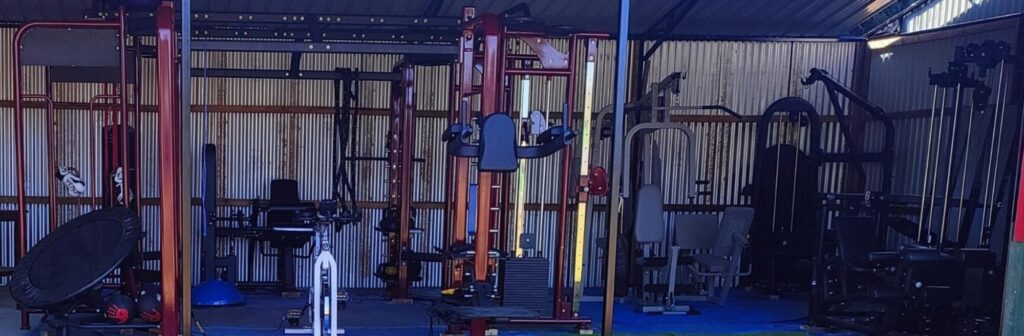
MaplePine Sweat Works Gym is the ideal place to recharge, learn and stay fit. We have always believed in ‘Slow Travel’ to experience and appreciate the new surrounding you encounter.

If you have 3 days – 5 days a week or more plan with us for an ultimate experience in Meghalaya. Include a little self-time, a little adventure and a little giving back to the world.

Self Time

Relax by the river, take a 2 km walk to Mawphlang Sacred forest, go in with a Guide and get a basic understanding of what the Sacred Forest is and was in traditional Khasi culture or enjoy a good work out in our Gym, relax with a coffee and read a book.

Adventure

Book a local Vehicle and guide and go out for a day Trip, South of us is You can contact Wanbor Langstieh – (WhatsApp – +91 98561 29175) he can arrange all your travel needs from MaplePine

Some Options – Article in Outlook India

Lum Symper only 20 km from MaplePine (a nice hike and great place to enjoy a day outing with a packed lunch.)

Jakrem Hot Springs -about 38 km from MaplePine

Mawsynram – about 35 km from MaplePine

Krem Puri – about 20 km from MaplePine

Mawlyngbna – about 55 km from MaplePine

and other places

Give Back to the World

Spend some time in a school and teach you favorite subject, passion, sport or just help out, the kids are eager and ready to learn. Just let us know your interest and time period available and we will arrange an opportunity for this interaction

{ Comments are closed }